

This week:
- The discovery to validation shift: full playbook
- How Isabelle King uses Airspeed every day as an inbound SDR
- Airspeed raises $20M Series A - watch the podcast
- Coming up: Happy hour in NYC and RevOps AF London
DEEP DIVE
The discovery to validation shift
Discovery and validation are not the same call with a different name. Discovery is diagnosis: you find the pain. Validation is prescription: you prove you can solve it. Treat them as two stages of one continuous conversation, not two separate meetings.
How good your validation call is comes down almost entirely to how good your discovery was. If prospects look confused in the demo, or you're showing features they never asked about, that's a discovery problem wearing a demo costume.
Here's how to get both right.
PHASE 1
Setting up for success: build your discovery foundation
Before any transition can work, the discovery itself needs structure. That means picking the right framework for your environment (SPICE for demand-poor markets, MEDDIC for high-demand) and training your team on the specific questions they need to stay in control.
Establish clear entry and exit criteria for each stage. You should only move to validation when there's a definitive pain you can solve and genuine customer motivation to explore solutions. Moving earlier is how deals stall.
To find out what questions actually work, go back to your closed-won deals. Examine the discovery calls. Identify the top 10 questions that consistently surface pain from prospects, and build your team's process around replicating those.
What to isolate from closed-won deals
Study your top performers across stage calls: discovery, demo, POC. They tend to be consistent. Look at the questions they ask in discovery that your average reps skip, and build those into your team's standard process.
PHASE 2
Executing a strong validation call
The golden rule: your validation call should directly reference what you uncovered in discovery. Every pain point you surface in discovery should map to something specific you show in the demo. If it doesn't, you're running a generic pitch, and prospects feel that immediately.
1. Prepare with discovery insights
Before the call: review your discovery notes, confirm the specific problems discussed, prepare solutions tailored to those problems, and have case studies ready that match their situation, not your best generic stories.
2. Open by reconnecting to discovery
Start by summarising what you learned, confirming the pain points are still accurate, and getting agreement on the problems before you show anything. A simple opener: "Last time we spoke, you mentioned [specific pain]. Is that still the biggest challenge you're facing?"
3. Demo against the pain, not against the product
Don't run through your standard deck. Show exactly how your product solves their specific problems in the order they care about. Use the validation framework: "You mentioned [pain] in discovery; here's how we solve that specifically, which means for you [direct impact]."
4. Create solutions, not a sales pitch
Your validation call should feel like a custom consultation. Map each feature to a specific pain point. Reference expected outcomes from similar customers. The prospect should feel like you built this for them.
PHASE 3
Scoring your validation call
After every validation call, run through this checklist:
- Did you reference specific discovery insights?
- Did the prospect confirm you understood their pain correctly?
- Did you demonstrate solutions to the exact problems discussed?
- Did the prospect engage with questions about implementation?
- Did you leave with clear next steps and a commitment?
And the red flags that tell you discovery needs work:
- You're showing features they never asked about
- The prospect seems confused about why you're showing certain things
- You can't connect what you're showing back to a specific discovery moment
- The prospect is passive or disengaged throughout
- No clear next steps or commitment at the end
PHASE 4
Coaching and continuous improvement
For sales leaders, track discovery-to-validation conversion rate, quality of discovery questions asked, and win rates by rep based on how well their validation calls reference discovery. Coach on asking better questions, taking better notes, and connecting solutions back to specific pain points, not on presentation style.
For individual reps: after every discovery call, write down the top three pain points, the business impact of each, and the specific features you'll prepare. After every validation call, ask whether you addressed all of them and whether the prospect saw the connection.
Make it a loop, not a handoff
If prospects are confused in validation, you're not asking the right discovery questions. If deals stall after validation, you didn't establish strong enough pain in discovery. Document which discovery questions lead to your best validation calls, and build templates connecting common pains to your solutions. Share wins, with specific discovery-to-validation examples, across the team.
And that's it!
USING AIRSPEED
How Isabelle uses Airspeed every day
Isabelle recently joined the team. Here's how she uses the product day to day, in her own words.
What she reaches for most is call recordings, not to re-listen to the whole call, but for the task area: the automatic list of everything discussed and every action item, ready to go. She doesn't take notes in meetings anymore. She doesn't need to.
"I usually don't take notes during meetings, just because it's all right here."
She also uses Airspeed to ramp faster. As a new SDR, she reviews teammates' cold calls and demos by skimming summaries and drilling into the moments that matter, not by watching recordings for hours.
The other feature she keeps coming back to is Ask Airspeed. She queries the whole week's activity in plain language, which deals went cold and why, and Airspeed pulls from calls, emails, and meetings to give her a direct answer. No chasing anyone for context.
"I can ask it anything. What deals went cold this week, and why? It goes through all our calls, emails, any meetings we had."
COMPANY NEWS
Airspeed raises $20M Series A

Last week, we raised a $20M Series A led by DN Capital, with participation from Vi Partners, Framework Ventures, Atlassian Ventures, and others.
This round is about one thing: closing the gap between what revenue teams know and what they actually do. Intelligence tools got good at telling sales teams what's happening. The execution layer, the part that does something about it, has been missing. That's what we're building, and this is the fuel to build it faster.
38 media mentions, 60+ posts from the community, and more pipeline conversations in five days than we expected in a month. The response told us the problem is real and the timing is right.
Read the full story on Pathfounders →
Watch Devang's conversation with EUVC →
FROM THE FIELD
Out and about
We've had a busy few weeks on the ground with the people building and running revenue teams.
GTM Fund dinner, London: We sat down with a group of GTM leaders for an evening of amazing conversation about where execution is breaking down and what teams are actually doing about it.
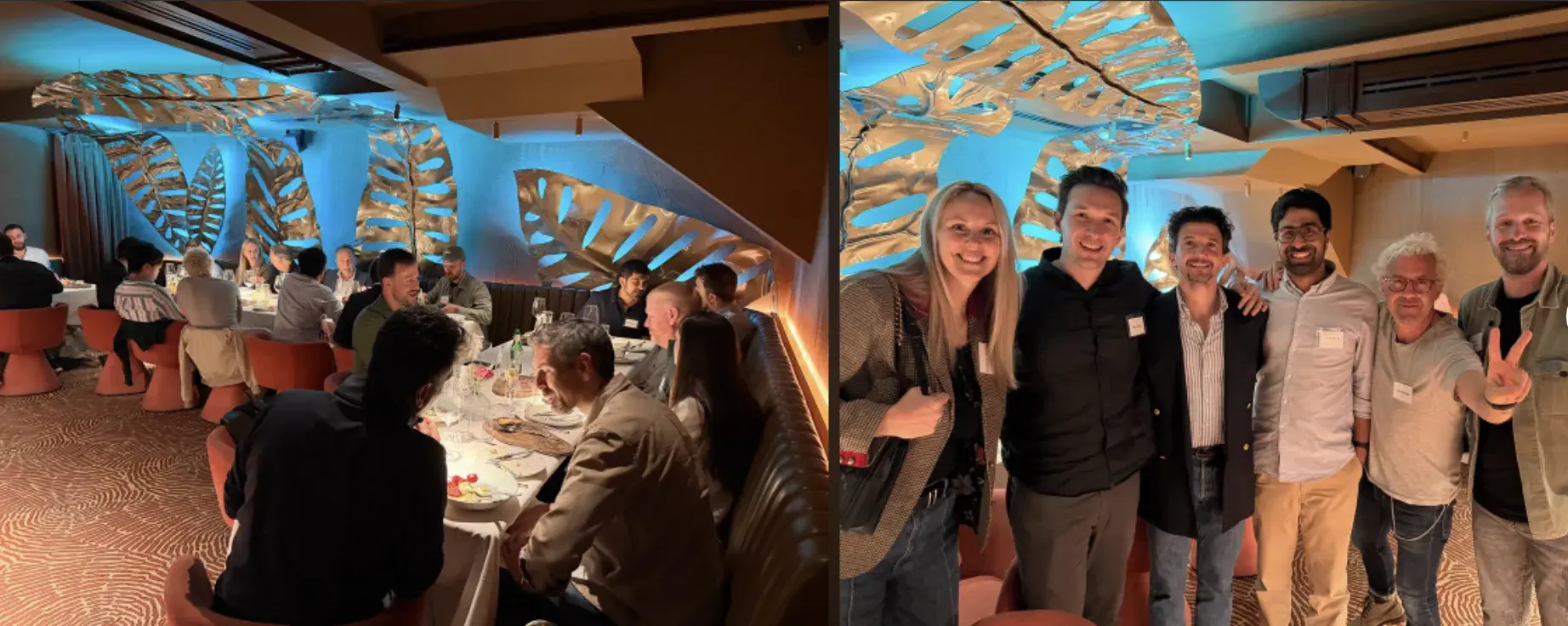
RevOps AF, London: We were at RevOps AF this week, one of the best communities doing real work in the RevOps space. Good conversations, good people, and a reminder that the practitioner community is miles ahead of where most vendor content gives them credit for.

WHAT'S COMING UP
Events & reading
● Watch Devang's conversation with EUVC →
● Save the date: Happy hour, New York City, June 24 Come find us in NYC for drinks and good company. We'll be sharing exclusive registration links soon!
And that's a wrap! If you found this useful, forward it to a teammate.


