


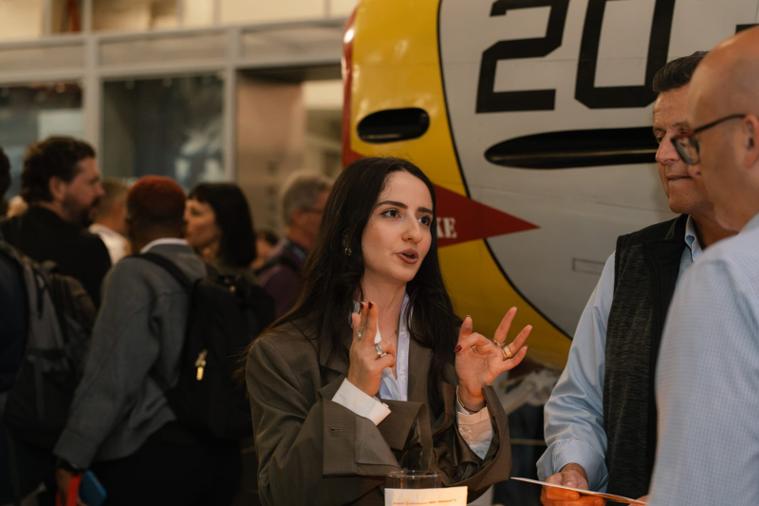
Everyone at GTM2026 is using agents, and almost nobody is convinced they’re using them the right way. That was the thread running through three days of conversations at Pavilion’s flagship event at The Glasshouse in New York (September 28 to October 1).
We spent the week talking with revenue leaders, operators, and reps about the challenges they’re wrestling with and the opportunities they can see coming. Huge thanks to Ryan and the Pavilion team for putting it together, and to Mathew, Jeff, Jared, and the Storylane crew for some of the best conversations of the week. Here’s what stuck with us.

Agents, agents, agents
If you played a drinking game for every time someone said “agents”, you wouldn’t have made it to lunch on day one. Everyone is building them, buying them, or being pitched them. But scratch the surface and a different story comes out: most teams aren’t sure they’re doing it right.
The real question people kept asking wasn’t “should we use AI?” It was “what should AI actually be doing for us?” There’s a clear disconnect between individuals experimenting on their own and teams trying to make it work as a group. One rep has a brilliant workflow, the rest of the org has no idea it exists.
The leaders who seemed furthest ahead were thinking about harnessing AI, not just using it: taking a process that works and turning it into something repeatable and scalable across the entire org. That’s the hard part, and it’s where most of the value is hiding.
There’s also a fair bit of fatigue in the room. Plenty of people told us, quite openly, that they’re tired of AI pitches. They’ve heard the promises. What they want now is proof that it works inside their own workflows.
Augment, don’t replace
The consensus was refreshingly grounded. AI belongs inside the workflows teams already run, helping them drive better results. It’s there to augment people, not to swap them out.
What that points to is a hybrid model: an AI workforce working alongside a human one. Agents take on the repetitive, time-consuming work, and people spend their energy on the parts of the job that need judgment, context, and relationships.
Reps still do the work that matters
One session walked through a LinkedIn report on AI in sales, and the headline matched what we heard on the floor: AI will take over the repetitive stuff, but reps still do the work.
Why? Because buyers still buy from people they trust. Credibility comes from expertise, and expertise comes from reps who know their domain, their product, and their own org inside out. No agent can fake that. What an agent can do is clear the busywork out of the way so reps have more time to build it.
On stage: agents need a harness
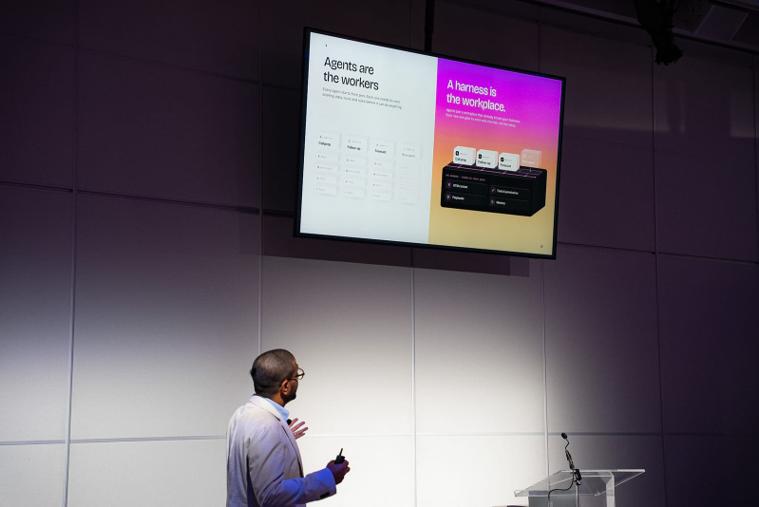
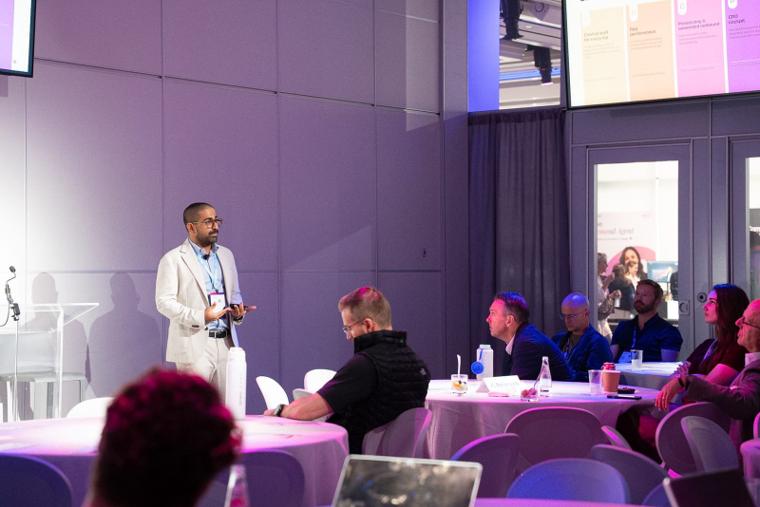
Our co-founder Devang took the stage to make the case that the agent is only half the system. His slides put it plainly: “Agents are the workers. A harness is the workspace.” The harness is what gives an agent the context, rules, and handoffs it needs to do real work across a team, not just for one rep.
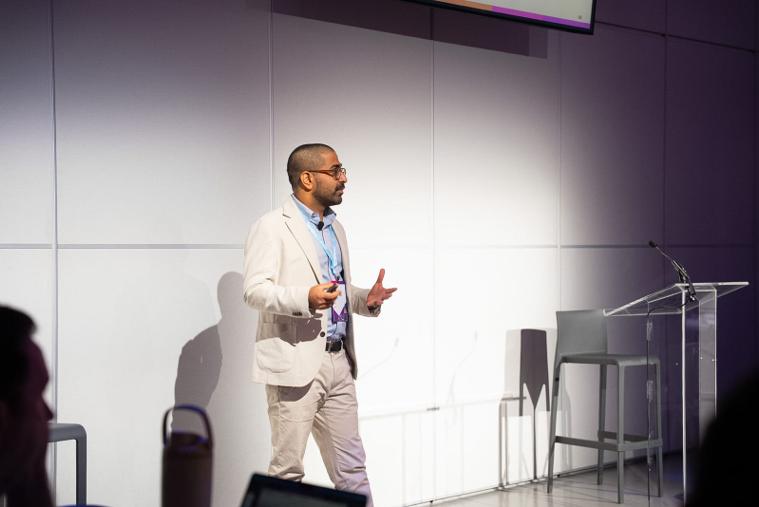
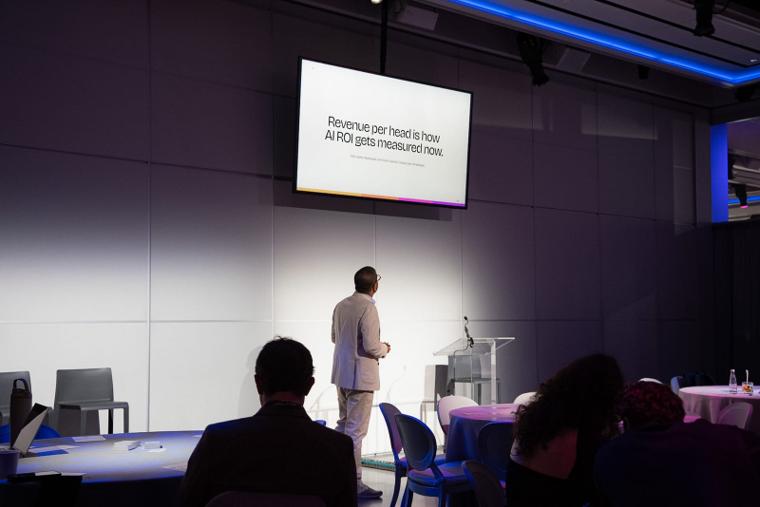
He also took on how leaders should judge AI spend: “Revenue per head is how AI ROI gets measured now.” If the agents are working, it shows up as more revenue per rep.
A safe space, and a very full booth
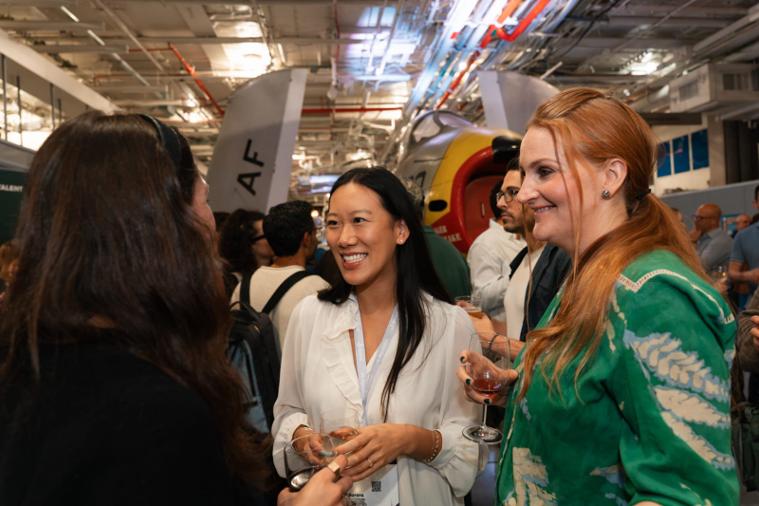
The women’s summit was a highlight. It felt like a real safe space, where people were properly asking for opinions, questions, and recommendations rather than performing for the room. Those are the conversations where you actually learn something.
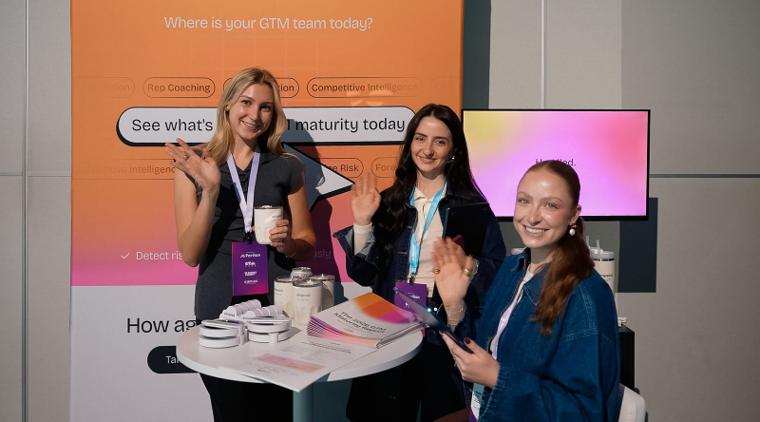
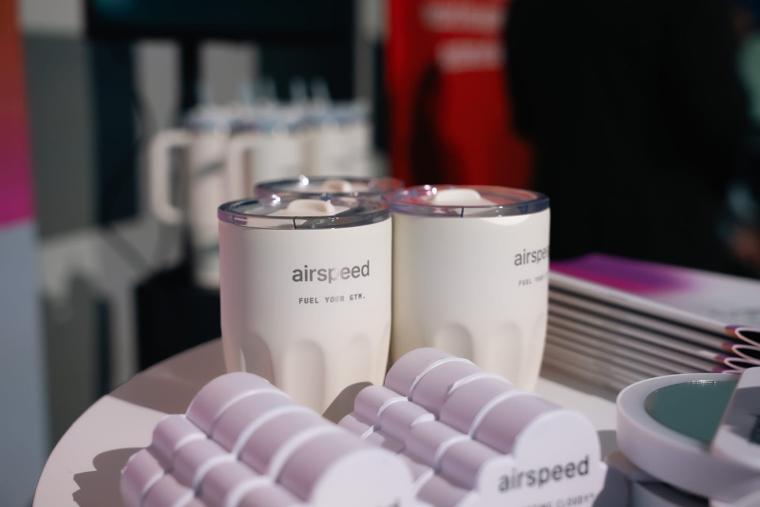
Over at our booth, it was busy from start to finish. We tried a few creative ideas this time, and the team favorite (Isabelle’s pick, for the record) was the candles. Thank you to everyone who stopped by for a chat.
Get the 2026 GTM Maturity Report
We handed out printed copies of our 2026 GTM Maturity Report at the booth. It puts numbers on the gap we heard about all week: AI saves each seller 4.8 hours a week, yet 72% of organizations never reinvest that time into selling (Gartner, 2026).
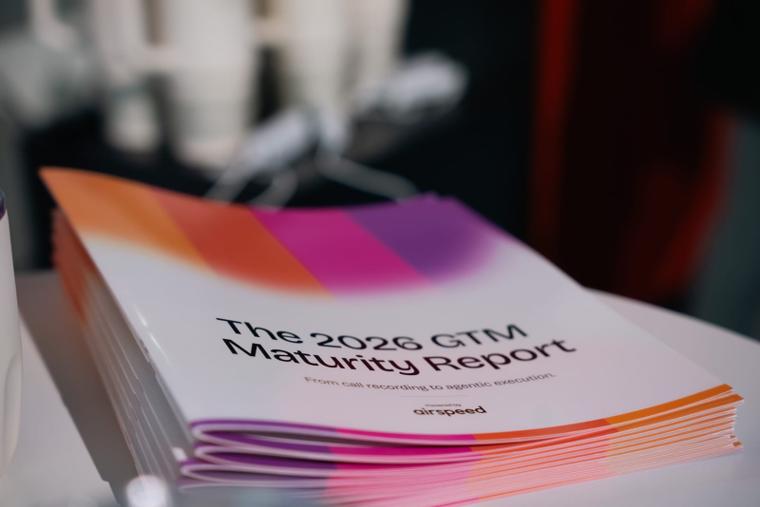
The report maps a four-stage curve, from call recording to conversation intelligence, revenue execution, and an agentic GTM harness. It shows where most teams stall and how revenue per head changes at each stage. Inside you get:
- A self-assessment and scoring table to place your team on the curve
- A breakdown of each stage and the human role in it
- A three-step plan for moving up
- The Foleon customer story
Download the 2026 GTM Maturity Report for free, or read the key findings first.
Watch more from the week
Our takeaway
The gap isn’t access to AI anymore. Everyone has agents. The gap is execution: knowing what AI should be doing, turning what works for one rep into a process the whole team runs, and giving agents the context they need to be useful.
That’s exactly the problem we’re building Airspeed to solve. Airspeed runs on your calls: it logs them, updates the CRM, and drafts the follow-up, so the process that works for your best rep runs for every rep on the team. If any of this sounds familiar, we’d love to keep the conversation going. Book a demo and come say hi.
Frequently asked questions
When and where was Pavilion GTM2026?
Pavilion's GTM2026 ran from September 28 to October 1, 2026, at The Glasshouse in New York City.
What was the biggest theme at Pavilion GTM2026?
AI agents. Almost every team is building, buying, or being pitched them, but most are unsure they are using them the right way. The leaders furthest ahead were turning one rep's working AI workflow into a repeatable process for the whole org.
Will AI replace sales reps?
The consensus at GTM2026 was no. AI takes over the repetitive work, but buyers still buy from people they trust, and that trust comes from reps who know their domain, product, and org.
Where can I download the 2026 GTM Maturity Report?
The report Airspeed handed out at GTM2026 is a free download on the GTM Maturity Curve page at goairspeed.com/lp/maturity-curve-assessment. It includes a self-assessment, a breakdown of each stage, and a three-step plan for moving up.


