

By Devang and Adam
It started before it was obvious
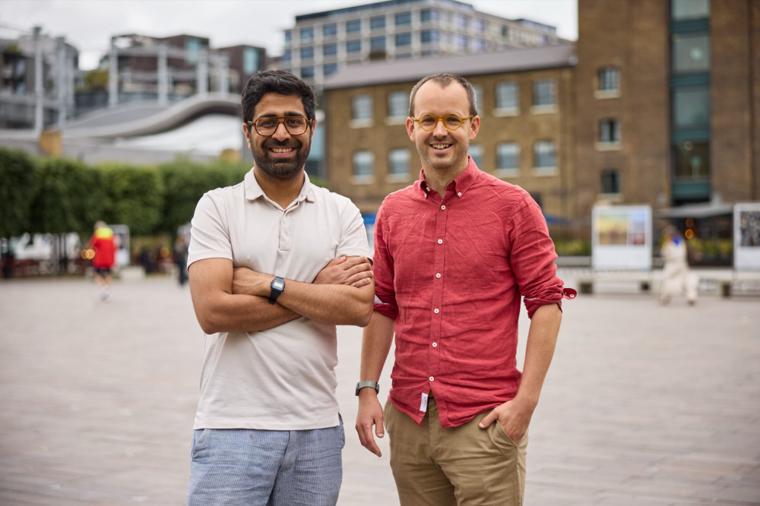
In 2022, Devang and I left DeepMind to build something we couldn’t stop thinking about.
The timing looked wrong from the outside. Everyone was calling it peak AI hype. But the truth is, the models weren’t ready. The market wasn’t asking for what we wanted to build. And yet we both had this feeling (having spent years at one of the world’s most advanced AI research labs, watching language models develop from the inside) that the world was about to change faster than anyone was ready for.
So we left. Two people, one idea, a small WeWork office in London.
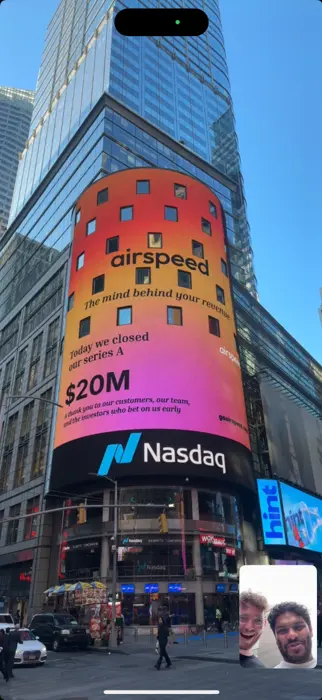
Today, we’re announcing Airspeed’s $20M Series A, led by DN Capital, with Framework.vc, Atlassian Ventures, Vi Partners, and others. This is the story of how we got here.
The problem we couldn’t unsee
Adam had always been obsessed with building assistants. During his PhD he built tools to help himself stay on top of research. At DeepMind he built a company-wide system that tracked every research project happening across the organisation, flagged relevant literature as it was published, and sent personalised lists of talks and workshops to researchers before conferences. He could watch papers being shared internally and see the exact spike in activity the moment the system surfaced something relevant.
The vision was always the same: what if a system could not just surface information, but act on it? What if a company could get better with every conversation it had, automatically, without humans in the loop monitoring everything?
Devang grew up in a small town in India in an entirely entrepreneurial household. His grandfather ran a clothing manufacturing business. His father did chemicals, then pivoted to CAD design. Nobody around him had a job in the traditional sense; they all built things. That environment taught him, without him realising it, that the most important thing you can build is a network, and that real problems get solved by people who get close enough to them to understand what’s actually broken.
What we both saw at DeepMind was this: the gap between having data and doing something with it was enormous, and nobody was closing it.
The early years
When we started building in 2022, the models couldn’t do what we needed them to do. Context windows were too short. We were training our own models just to get close to the vision. Then combinations of our own models with the OpenAI API. Then we became early Claude users, and when Anthropic shipped 100k context length, we jumped on it immediately. It didn’t just make the product better. It made the entire engineering problem easier to solve. That was the unlock.
But the technical progress was only half of it. The harder problem was the market.
In 2023, when we’d pitch the vision, people would say “it makes sense”, and then do nothing. There was understanding but no urgency. We kept building.
In 2024, something shifted. Buyers stopped needing to be convinced. They started asking for AI solutions. The urgency arrived. We 4x our revenue. The category stopped being a question.
We moved WeWork offices. Then again. Then again.
What Airspeed actually is
Go-to-market teams are the interface between a company and the outside world. They generate enormous amounts of data: every call, every deal, every conversation with a customer or prospect. For twenty years, the industry’s answer was to make it easier to log that data. But just having data logged, unstructured, not connected to the right concepts or objects, doesn’t give you much.
There is still a massive gap between having the data, turning it into insights, and actually doing something with those insights. Even if you have the insights, you still need humans to take action on them. And most of the time, they don’t, because they’re too busy, too distracted, or the moment has already passed.
Our mission is to close that execution gap completely.
With Airspeed, the best GTM teams don’t collect more data to rust on shelves. Our agents execute on every signal (automatically, continuously, in the background) so the whole organisation moves faster.
The fundraise
Devang has always believed that startup fundraising is about serendipity. And our Series A story proved that.
It didn’t start in a boardroom. It started at Stockholm Airport at 6am, in a taxi on the way to a customer offsite at GetAccept in Sweden.
GetAccept, one of our customers, had invited us and DN Capital to the same event. Seeing that intensity of customer love in person (not in a reference call, not in a case study, but live in a room full of people) that was what got DN Capital truly excited. That’s what allowed them to cut through the noise and preempt our round.
That night, Devang, Raoul, and Samir jumped into the ocean in Stockholm at 9pm. That’s when we knew.

What this funding unlocks
We’ve grown revenue 4x year-over-year. We’ve doubled the team. We’re approaching 200 customers across verticals, including teams like Deepsea, Pricefx, and Light.
But we’re just getting started.
This funding accelerates three things we’ve been building towards since the beginning.
The first is the context layer for LLMs.
The agents themselves, the LLMs, are already incredibly intelligent. What they completely lack is curated context about your organisation. We’re building that layer. Making sure that every agent running on Airspeed has access to the best, most recent, most relevant information about how your company operates, how you win, how you lose, and what your customers actually care about.
The second is sub-agent orchestration at scale.
Imagine a sales organisation with a thousand reps, each having multiple calls a day. You want to extract insights from all of those calls at once, find patterns across every geo, and surface them to leadership automatically. You can never fit that into a single LLM call. The research problem of how you orchestrate clusters of sub-agents to process that knowledge, extract only the correct pieces, and feed it to an orchestrating agent: that is one of the hardest problems in applied AI right now. We’re solving it.
The third is true Customer 360.
Right now your customer data lives across tens of different platforms: Amplitude, MixPanel, Salesforce, your conversational intelligence platform, emails, ticketing, your own database. All of them have a slightly different picture of your customer. Nobody has brought all of those structured and unstructured sources into one unified platform, specialised for whoever is asking. We are building that on Airspeed, so whether you’re going for an upsell, handling a support issue, or preparing for a renewal, the right information is already there.
The vision, the one we share with our investors, is that eventually all board meetings should run completely from within Airspeed: with objective data that creates alignment between the board and the management team, no finger pointing, no he said she said.
What’s next
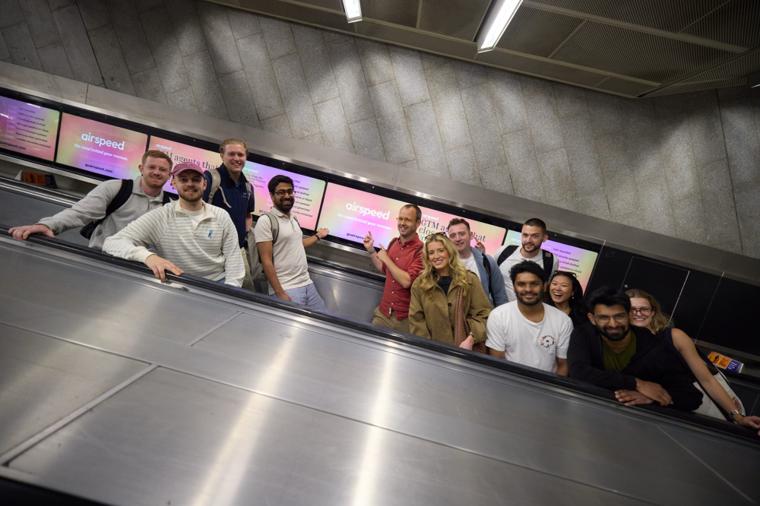
We’re growing fast and we’re hiring. The market has urgency now. The models are ready. The infrastructure is in place.
We’ve been mostly building heads down. Sometimes not even stopping to celebrate.
This felt worth stopping for.
Before we end, a special thank you to Jamie at Point72 Ventures, who backed us at the pre-seed before any of this existed; thank you for believing first.
Devang later told Authority Magazine how the technical foundation behind all of this got built, and why trust had to come before autonomy.
#GoAirspeed
Frequently asked questions
Who led Airspeed's $20M Series A?
DN Capital, with participation from Framework.vc, Atlassian Ventures, Vi Partners, and others.
How did Airspeed start?
In 2022, co-founders Devang Agrawal and Adam Liska left DeepMind to build it. The timing looked wrong from outside, with everyone calling it peak AI hype, the models not yet ready, and the market not asking for what they wanted to build.

